





 Download factsheet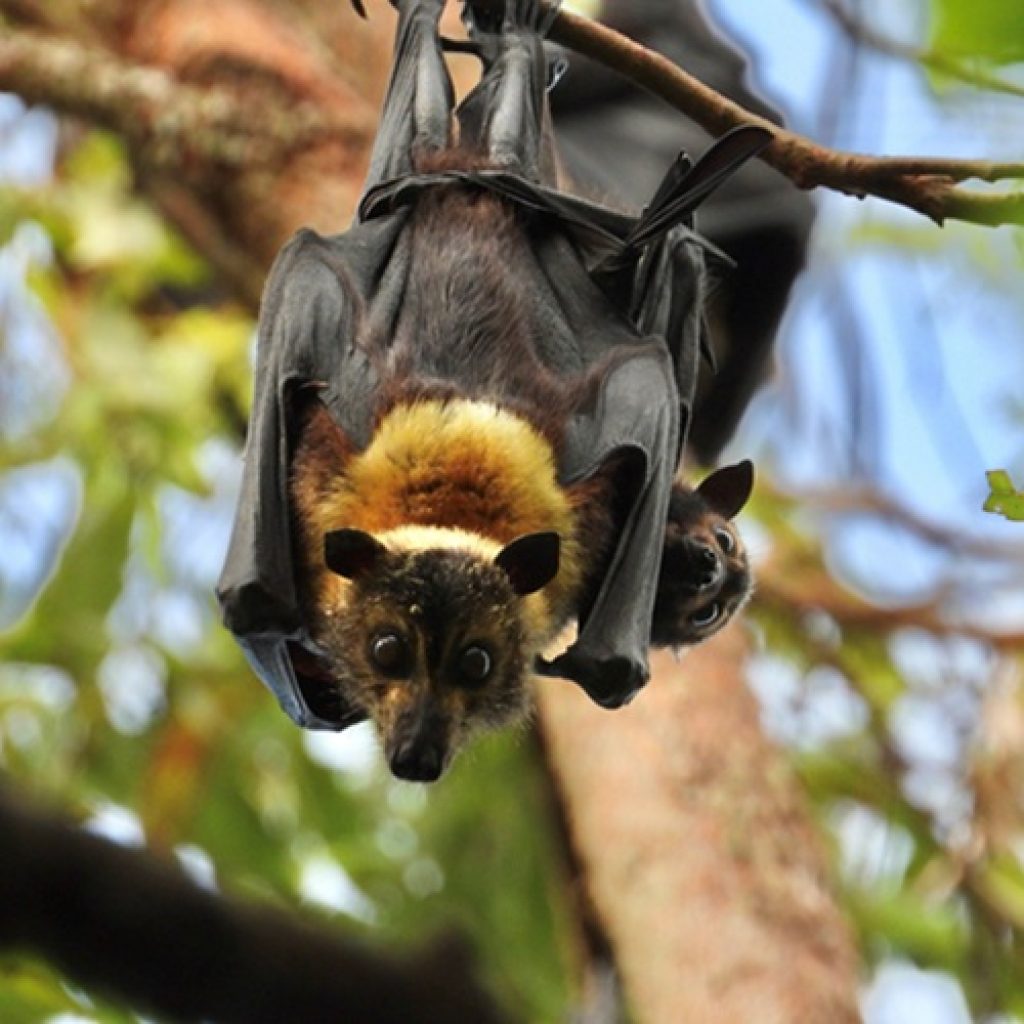
Reuniting abandoned pups with their mothers
Read More
BIOSECURITY RISKS OF THE WET TROPICS
HIPTAGE VINE
20 MARCH 2026
WHAT IS IT?
Hiptage (Hiptage benghalensis) is a woody vine or dense, scrambling shrub native to Asia. Initially introduced as an
ornamental plant, it has become highly invasive in many tropical and subtropical regions.
In the Wet Tropics it is restricted to the Mossman area.
WHY IS IT A PROBLEM?
Hiptage vine poses a serious threat to ecosystems.
It smothers native vegetation, forming dense thickets that block sunlight and prevent regeneration. Its weight can cause trees to collapse, and it invades riparian areas, threatening biodiversity and waterway health.
Hiptage produces windborne seeds which can spread long distances into undisturbed forests.
CHARACTERISTICS
Hiptage can grow as a shrub in open areas or as a vine in rainforests, reaching to the top of the canopy. It has opposite,
elliptical leaves (9–19 cm long) that are shiny on top. Its fragrant flowers are white with pink tinges and yellow markings.
The seed has three helicopter like wings, aiding wind dispersal. The seeds also float so they can be spread by water.
HOW TO SPOT IT ON YOUR PROPERTY
Look for twisting stems with whitish raised spots, shiny elliptical leaves, and clusters of fragrant flowers which usually occur in the dry season. The vine rapidly climbs trees and structures, forming dense vine towers. Its three-winged seed is distinctive and pale brown when mature.
One of the best ways to identify the vine is to blaze the bark.
Using secateurs, gently blaze the bark to expose the inner layers of the vine’s stem. The outer margins will reveal a thin green layer that gradually transitions into a thicker white layer. The inner margins will present a clear light brown colour. No sap should be visible after the bark has been blazed.
WHAT TO DO ABOUT IT
- Physical removal: Hand-pull recently germinated seedlings ensuring all roots and fragments are removed.
- Chemical control: Once seedlings are established, use cut and paint techniques with herbicide (cut stems at about
waist height with secateurs or loppers and immediately paint them with herbicide). Larger plants will require the cut-stump technique (cutting the plant near the ground and then applying herbicide to the exposed stump). No herbicide is currently registered for control of Hiptage in Queensland. However, an off-label use permit (Permit No. PER11463 https://permits.apvma.gov.au/per11463.pdf ) allows use of various herbicides for control of environmental weeds in non-agricultural areas, bushland, forests, wetlands, and coastal and adjacent areas. Follow up control may be required. - Prevention: Avoid planting Hiptage and report infestations to local authorities.
- Report any sightings of Hiptage to local authorities to help prevent its spread.
- Do not move seeds, plant material, or soil that may contain Hiptage remnants. Always dispose of them in a sealed bag or controlled waste system to prevent further dispersal.
RESOURCES:
Douglas Shire Council Biosecurity Management Plan – https://douglas.qld.gov.au/
download/natural_resource_management/DSBP-2022-2026_version-1.4_PRINT.pdf
BIOSECURITY OBLIGATIONS
RELATED NEWS
Removing pond apple
 admin@terrain
 September 23, 2026
Hundreds of pond apple trees removed at the Russell River...
Read More
Rediscovering native grasslands
admin@terrain
September 23, 2026
Grasslands were once widespread in this region...
Read More


