





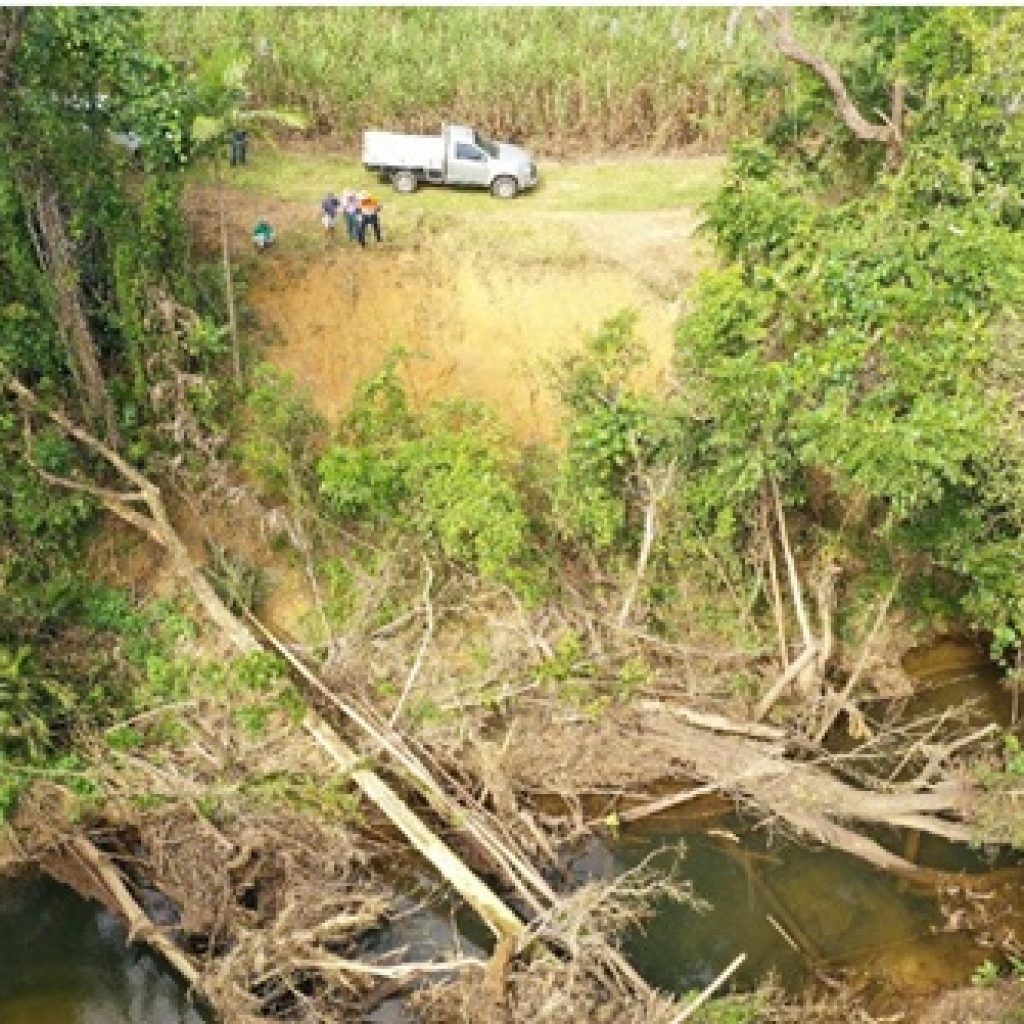
Working with nature to repair damaged riverbanks
Read More
BAMBOO CREEK: FIVE YEARS ON FROM MAJOR FLOOD DAMAGE
WORKING WITH NATURE TO REDUCE RIVERBANK EROSION
28 SEPTEMBER 2026
Five years after losing nine metres of riverbank during a major flood, a Bamboo Creek site near Mossman remains stable despite several more significant flood events. The recovery shows how nature-based solutions can help protect farmland, infrastructure and waterways from erosion.
While flooding is a natural part of life in the Wet Tropics the increasing frequency and severity of severe flood events are having significant impacts on communities, agriculture, infrastructure and the natural environment.
Rivers where riparian vegetation has been removed are particularly vulnerable to flood damage. Clearing makes riverbanks more susceptible to erosion during high flows, leading to the loss of soil, increased sediment runoff and damage to downstream habitats, including the Great Barrier Reef.
There are several ways to manage flood-related riverbank erosion. Some require hard engineering but solutions that work with natural processes are better for longer-term outcomes. They can help slow water flow, stabilise banks and reduce erosion creep, which is better for waterway health and helps protect community infrastructure.
Living example – Bamboo Creek
In 2019, intense flooding caused significant bank collapse at Bamboo Creek near Mossman. Around nine metres of riverbank was lost resulting in a near-vertical bank up to 7.5 metres high and a substantial loss of sediment and riparian vegetation.
Without intervention, further erosion threatened productive farmland and would have continued sending sediment downstream into waterways connected to the Great Barrier Reef.
Terrain NRM stabilised the bank with a combination of bank reshaping (battering) to create a more stable slope, rock armouring (rock beaching) and revegetation along the upper bank.
Five years on, this site (BC-1) has weathered several major flood events since and remained stable. The revegetation higher up on the bank is key to long-term stability but the design also ensured that even significant flood events resulted in only shallow and infrequent inundation.
What made this project successful?
The Bamboo Creek project highlights several important lessons for riverbank rehabilitation:
- A strong understanding of how water moves through a system is critical to project success.
- Every site is unique, and remediation designs must be tailored to local conditions. For example, pile fields were not suitable at Bamboo Creek due to the steep bank height and site access limitations.
- Simple, well-designed solutions can be highly effective and durable over the long term. When matched to site conditions, basic approaches can outperform more complex interventions.
- Flood exposure is influenced not only by the magnitude of flooding, but also by how often and how deeply water reaches revegetation areas.
By combining a sound understanding of river processes with practical, on-ground works, nature-based solutions like this are helping to protect community infrastructure and farmland from future flood damage.
BAMBOO CREEK AT A GLANCE:
- Up to 9 metres of riverbank lost during flooding
- Bank height up to 7.5 metres
- Stabilised in 2019 using a combination of reshaping, rock protection and revegetation
- Remained stable through several subsequent major flood events
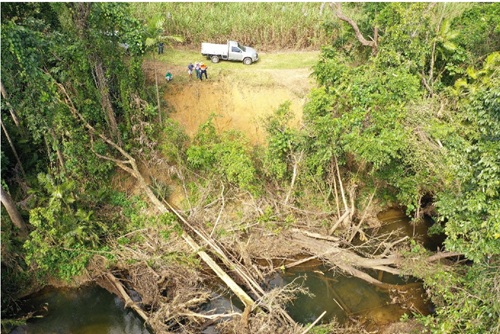
Flood damage caused extensive riverbank collapse
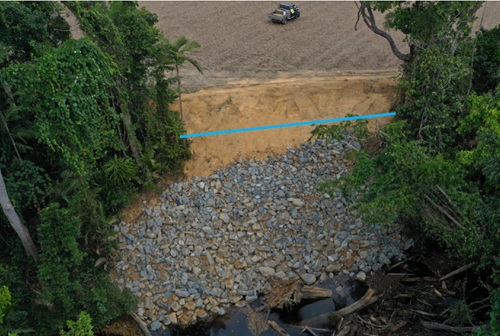
The riverbank was reshaped and stabilised using rock protection designed to work with natural river processes.
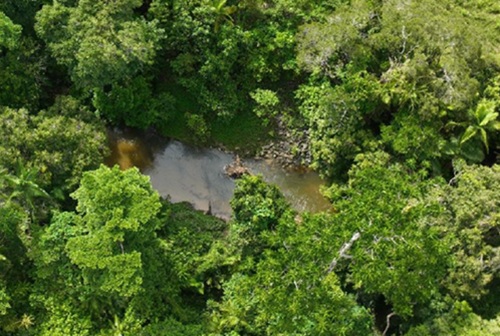
Five years on, vegetation has re-established and the site has remained stable through several major flood events.
Interested in understanding more about nature-based riverbank restoration? Download the report
RELATED NEWS

Bat Bassinet Trialled
 admin@terrain
 October 7, 2026
Reuniting abandoned pups with their mothers
Read More
Removing pond apple
admin@terrain
September 23, 2026
Hundreds of pond apple trees removed at the Russell River...
Read More


