





Reuniting abandoned pups with their mothers
Read More
PROTECTING RUSSELL RIVER RAINFOREST
REMOVING POND APPLE
SEPTEMBER 2026
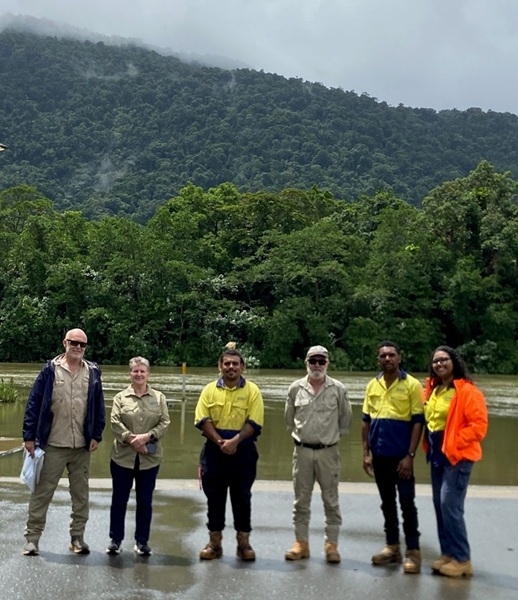
Hundreds of pond apple trees have been removed from the edge of the picturesque Russell River.
Indigenous rangers are targeting the pest species, which was originally introduced as grafting stock for commercial custard apples. It’s now out-competing native species along waterways and in world-heritage rainforests.
Jaragun Ecoservices’ team has treated more than 400 mature trees over a six-month period, along with pond apple seedlings. They reached the areas by boat, to inject trees with targeted dry herbicide capsules.
Pond apple removal work was part of a broader ‘Forest Resilience’ project to better protect six forest types across the Wet Tropics region through weed and pest control, tree-planting and conservation agreements.
Important area with unique microclimates
Terrain NRM’s Deb Bass said the Russell River is an important area.
“Along the lower Russell River, there is lowland rainforest, littoral rainforest and mangroves growing side by side, creating unique microclimates for rare and ancient plants,’’ she said.
“Both littoral and lowland rainforest are listed as Threatened Ecological Communities.”
Cyclones creating opportunities for pest plants
Pond apple got a foothold in the lower Russell River area after Cyclone Larry, when tree canopies were damaged, letting more light in. The project is focused on removing pond apple trees before they create thickets and take over rainforest areas.
“Left untreated, this invasive species will grow into dense thickets. It hasn’t taken over the rainforest yet, so it makes sense to remove the individual mature pond apple trees now.”
Ongoing monitoring for pond apple is needed
Pond apple seeds can remain viable for up to two years. Jaragun Ecoservices rangers will continue to monitor the river system.
 The Forest Resilience project was funded through the Australian Government’s Saving Native Species Program. This two-year project is taking a whole-of-ecosystem approach to benefit multiple threatened species by improving the condition of six priority forest types in the Eastern Forests of Far North Queensland priority place identified in the Australian Government’s Threatened Species Action Plan 2022-2032.
The project supported more than 20 on-ground projects.
RELATED NEWS
Removing pond apple
 admin@terrain
 September 23, 2026
Hundreds of pond apple trees removed at the Russell River...
Read More
Rediscovering native grasslands
admin@terrain
September 23, 2026
Grasslands were once widespread in this region...
Read More


