





Reuniting abandoned pups with their mothers
Read More
NEW ‘BABY BAT BASSINET’ TRIALLED
REUNITING ABANONED SPECTACLED FLYING-FOX PUPS WITH THEIR MOTEHRS
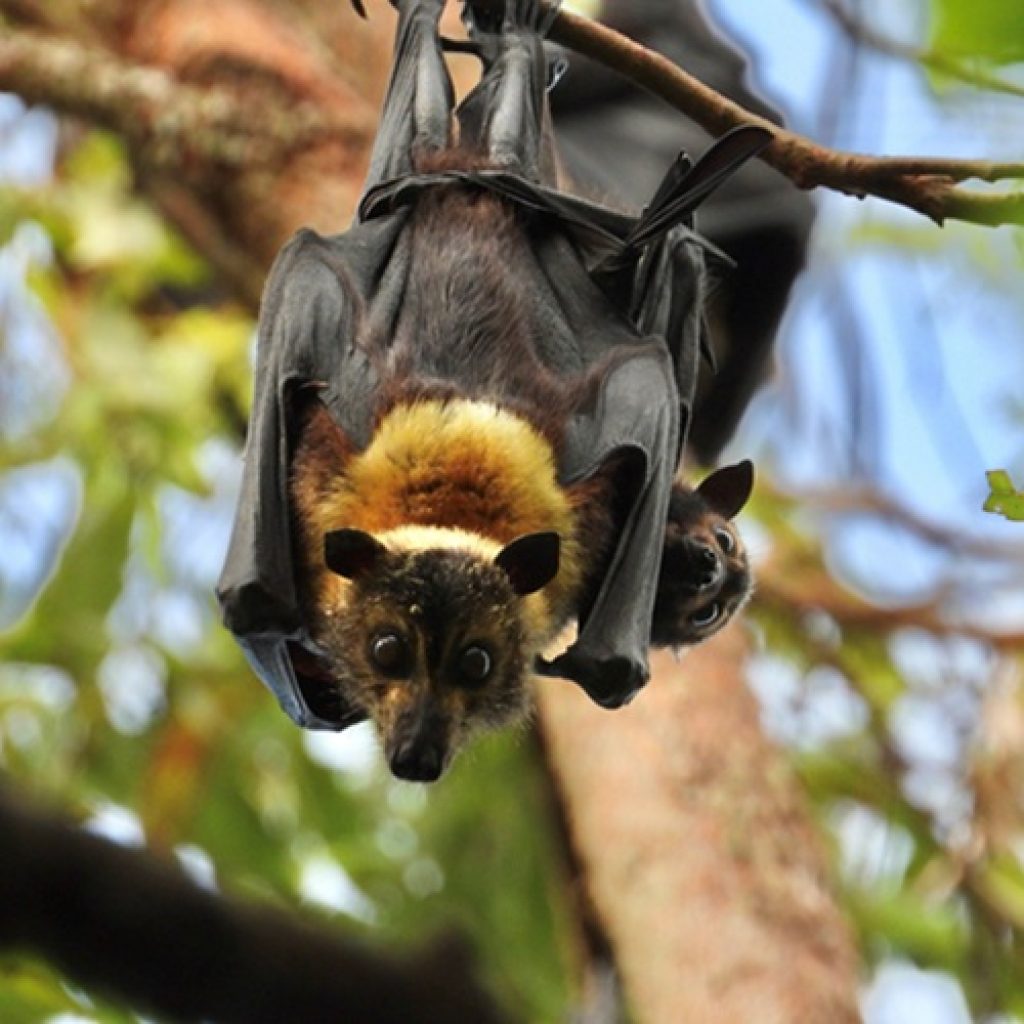
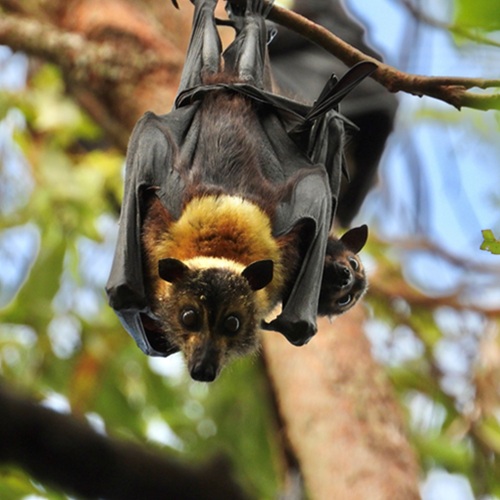
It’s baby bat season for endangered Spectacled Flying-foxes, and conservationists are trialling a new way to help reunite lost pups with their mums in Cairns.
A ‘bat bassinet’, or mother-pup reunion net, has been installed at John Egan Park in Cairns North. It’s a specially designed net to give abandoned pups a safe spot to be temporarily placed in the hope that mothers will find and retrieve their young as they call out to them from the net.
Spectacled Flying-foxes give birth to just one pup each year, making every new arrival important for the recovery of the species.
Kristy Jensen, Coordinator Wet Tropics Wildlife Rescue, said the species congregates in maternity roosts through spring and summer.
“The birthing and nursery season typically runs from September through to March, and numbers at maternity roosts can increase significantly during this time,” Ms Jensen said.
“There are more than 70 roost sites across the Cairns area. While having a maternity roost nearby can be challenging for residents, this is seasonal behaviour. By Easter, most roosts will have dispersed to other locations.”
Cheryl Hudson, wildlife carer and Bat Coordinator for FNQ Wildlife Rescue, said hundreds of flying-fox pups are orphaned or separated from their mothers every year.
“Last year, almost 400 orphaned pups were rescued in the Cairns region alone, including 241 from one of the region’s largest maternity roosts at John Egan Park off Grove Street,” Ms Hudson said.
“We want to give these babies the best possible chance of being reunited with their mothers.”
“Flying-fox mothers can recognise their pups through their calls and scent. Similar reunion nets have been used successfully elsewhere, and we’re hopeful this initiative will help more families to reunite.
“Flying-fox mothers carry their young constantly during the first few weeks of life, so this is a particularly vulnerable time.
“Mothers and pups can become separated when roosts are disturbed by loud noises, severe weather or other disturbances.”
Spectacled Flying-foxes are native to the Wet Tropics of Far North Queensland and play an important role in maintaining healthy rainforests.
They pollinate flowering plants and disperse seeds over large distances, helping forests regenerate and maintain their biodiversity.
In 2018, a severe heatwave caused mass deaths of Spectacled Flying-foxes, contributing to the species being listed as endangered.
Ms Jensen said Spectacled Flying-foxes continue to face significant threats including climate change, habitat loss, paralysis ticks, entanglement in barbed wire and powerlines, and human disturbance.
“Through recent monitoring, we are seeing populations showing encouraging signs of recovery, but the threats remain significant,” she said.
“With another hot summer forecasted, every pup matters. Giving mothers and their babies a safe, undisturbed place to raise their young is one simple way the community can help.”
How residents can help during baby bat season
- Avoid entering flying-fox roosts.
- Keep dogs away from roost areas.
- Avoid shining lights into roosts at night.
- Avoid making loud noises directly beneath roosts.
- Never handle injured or orphaned bats.
Who to contact if you see a sick or injured bat
Spectacled Flying-foxes are a threatened species with special protections under National and State legislation. It is an offence to harm them or disturb their roosts, and substantial penalties may apply. If you find a sick, injured or dead bat, avoid touching it — call FNQ Wildlife Rescue on (07) 4053 4467.
For more information about Spectacled Flying-foxes go to www.terrain.org.au/spectacled-flying-foxes-faqs
Thanks for giving a flying-fox…a chance!
This project is supported by the Australian Government through funding from the Natural Heritage Trust and the Saving Native Species Programs.
RELATED NEWS
Removing pond apple
 admin@terrain
 September 23, 2026
Hundreds of pond apple trees removed at the Russell River...
Read More
Rediscovering native grasslands
admin@terrain
September 23, 2026
Grasslands were once widespread in this region...
Read More


