





Hundreds of pond apple trees removed at the Russell River...
Read More
FUTURE-PROOFING FARMS
IMPROVING THE RESILIENCE OF BANANA, GRAZING AND CANE LAND
Banana, grazing and cane land will be improved in the Cassowary Coast region through a new $2 million project.
Terrain NRM will be working with landholders from Innisfail to Kennedy on initiatives to increase the resilience of their land through a ‘Future Farms’ project funded by the Queensland Government.
Help after extreme weather events
“Local landholders have been subject to extreme weather events in recent years, and this program will fund on-ground initiatives to improve farm resilience and soil and land conditions,” Minister for Natural Resources, Mines, Manufacturing and Regional and Rural Development Dale Last said.
Terrain NRM is working with the Australian Banana Growers Council, Canegrowers Innisfail, the Cassowary Coast Graziers Association and landholders on the program, which is built around directly improving soil health, soil condition, land condition and waterway health.
Demonstration sites on farms
As part of the project, several landholders will host demonstration sites on cane, banana and grazing land. On cane land, these sites will focus on mixed species fallow crops, improved drainage, laser levelling and soil amelioration.
In grazing country, the focus will be on pasture management including legume planting, strategic paddock layout and erosion control along waterways using revegetation and fencing.
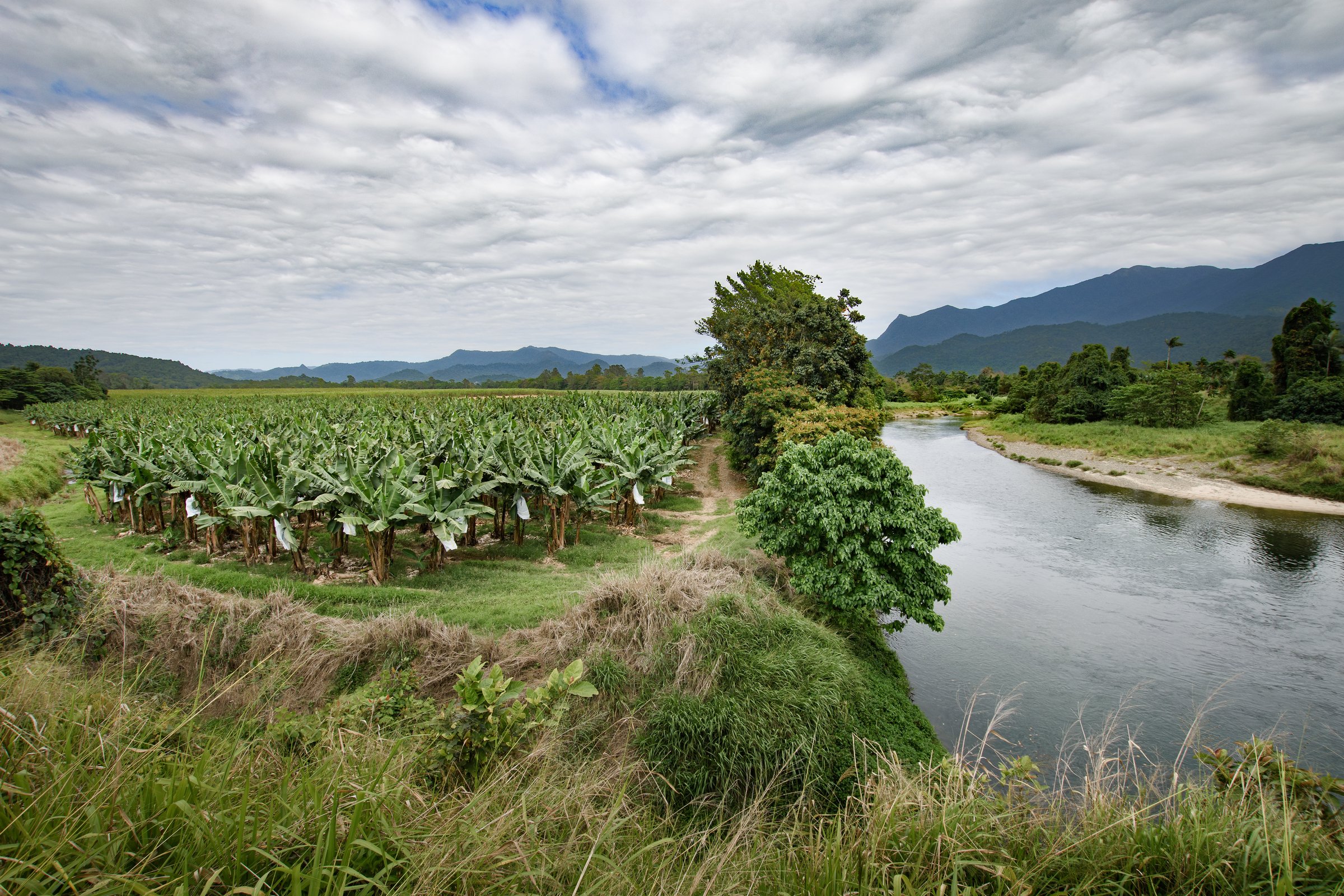
On banana-growing land, demonstration sites will showcase contouring to help mitigate erosion on slopes and farm drainage design and streambank remediation to reduce sediment loss.
Terrain NRM’s CEO Stewart Christie said the Cassowary Coast region had experienced repeated severe weather events over the past two decades including Cyclones Larry (2006), Yasi (2011), Niran (2021) and Jasper (2023), and major flooding from tropical lows in 2025.
“These events, following decades of land-use pressures, have extensively damaged the region’s agricultural landscapes, resulting in financial losses and long-term degradation of land and waterways,’’ he said.
Climate exposed landscapes
“This area sits between two World Heritage-listed regions, the Great Barrier Reef and the Wet Tropics Rainforest, making it one of Queensland’s most ecologically significant and climate-exposed landscapes.
“Its coastal floodplains support high biodiversity and provide vital ecosystem services, while also sustaining intensive agricultural production that underpins the local economy. “Agriculture contributes more than $630 million each year to the Cassowary Coast, with sugarcane, bananas and grazing forming the foundation of regional livelihoods.
Practical tools and on-ground support
“This project is a way to support landholders through practical tools, knowledge and on-ground support to increase their resilience so they can continue producing now and into the future.”
The Australian Banana Growers Council’s Amelia Foster said the project was an opportunity to build on the strong foundations of banana farms that are already demonstrating best practice – by further improving their long-term resilience and profitability.
“Working alongside experienced engineering consultants will also strengthen our Best Management Practice team’s technical skills and increase industry capability to support practical, farm-based solutions into the future,’’ she said.
The funding is part of the Queensland Government’s $117.8 million Natural Resource Management Expansion Program. This program is also funding a ‘Green Connections’ project in the Wet Tropics region, improving the condition and extent of native vegetation in ecological corridors and strategic rehabilitation areas.
RELATED NEWS
Rediscovering native grasslands
 admin@terrain
 September 23, 2026
Grasslands were once widespread in this region...
Read More
New Water Quality Strategy
admin@terrain
August 25, 2026
Updated catchment priorities released
Read More


